
Three Empty Cages.
The stories we A visit to Münster led me to one of history's most unsettling reminders that some questions refuse to disappear.choose never to let go.

The first thing you notice is the church.
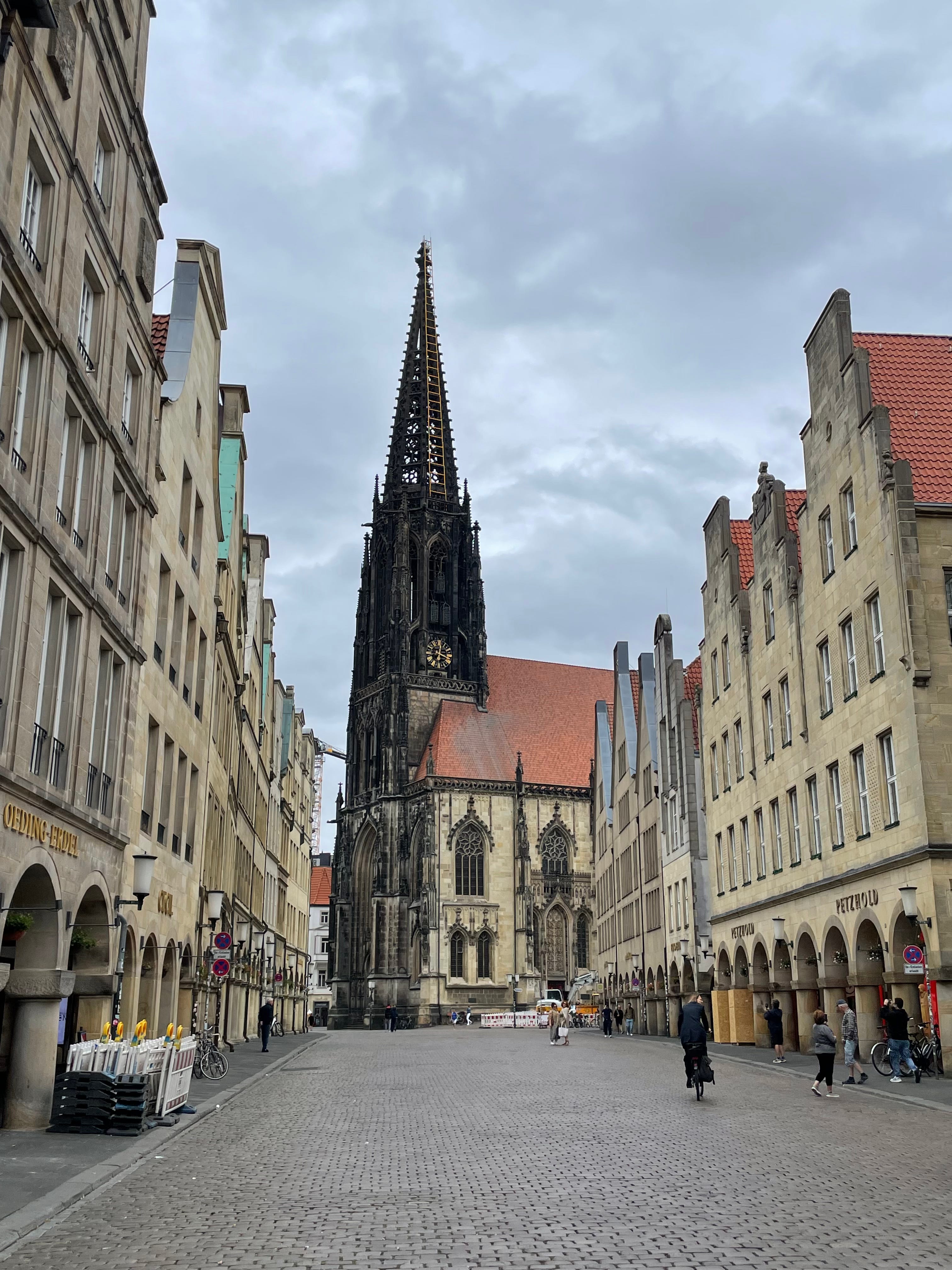
Its soaring Gothic stonework dominates the skyline, while the great clock has watched over Münster for centuries.
But it isn’t the church that stays with you.
It’s three iron cages.
High above the marketplace they hang, black against the sky, too small to dominate the tower, yet too strange to dismiss as decoration.
Every visitor asks the same question.
Why are they still there?
Standing beneath St. Lambert’s Church, I found myself asking exactly that.
As I stood in the square with the warm midday sun bearing down on my face, Münster carried on as though it were any other ordinary day. Conversations drifted from the cafés. Cyclists passed without hurry. Children laughed as they wandered through the market with ice creams already beginning to melt. Nothing about the scene hinted at the story hanging overhead.
Then I looked up.
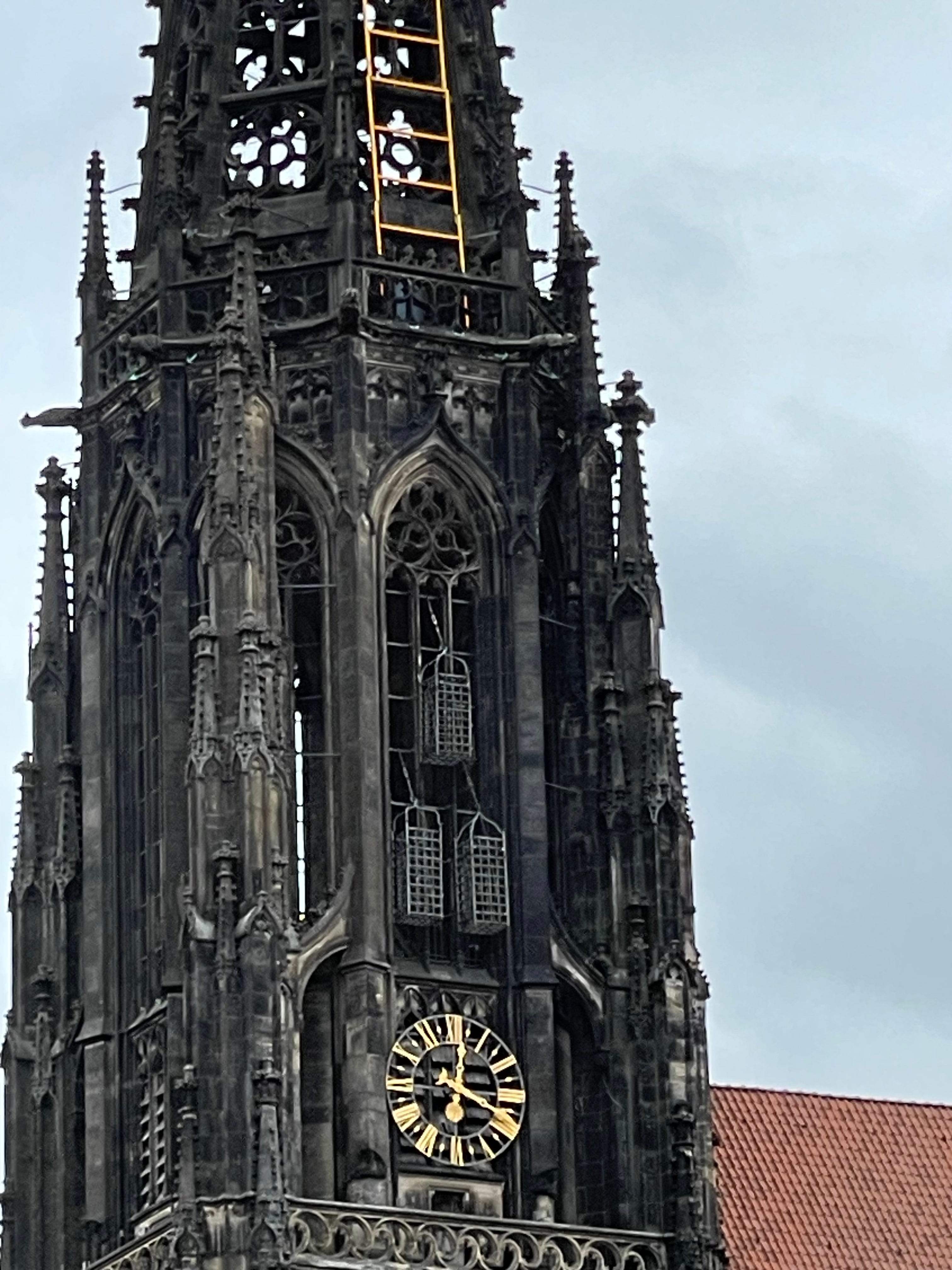
Looking Up
Three iron cages hung high above St. Lambert’s Church.
Empty.
Suspended between earth and sky, they had become more than iron cages. They carried a story that had survived almost five centuries.
To understand why those cages are still there, we have to go back almost five hundred years, to three men who believed they were building a better world.
They were not kings.
They were not generals.
They were not criminals.
They were believers.
Jan van Leiden was a charismatic young Dutch preacher. Bernhard Knipperdolling was a wealthy cloth merchant and respected citizen of Münster. Bernhard Krechting had once served as the town clerk in nearby Warendorf.
They came from different walks of life, but they shared the same conviction.
Europe was in turmoil. The old certainties were being questioned, and new religious ideas were spreading with remarkable speed. To many, these men offered something more than a new interpretation of scripture. They offered hope.
They believed the world was about to change.
Christ’s return was close.
Münster, they believed, could become the New Jerusalem, a city governed not by princes or bishops, but by God himself.
It was an extraordinary promise.
A city where wealth would be shared. Where faith, rather than birth or privilege, determined your place. Where the old order would be swept away and replaced by something new.
For many, it was a message of hope. And hope can be a powerful thing. As more people embraced their vision, Münster began to change.
At first, change came gradually. Adult baptism replaced infant baptism. Property was shared. But as the movement gathered strength, disagreement became increasingly difficult. Those unwilling to embrace the new order found there was less and less room for compromise.
What had begun as a dream was becoming something altogether different. History is full of movements that begin with hope and end somewhere their founders never imagined. The city was surrounded. Food became scarce. Fear replaced optimism.
Conviction hardened into certainty.
Rules that once seemed unthinkable became law. Even marriage itself was reshaped in ways many could never have imagined.
The siege lasted more than a year. By the summer of 1535, it was over.
The city fell. Jan van Leiden, Bernhard Knipperdolling and Bernhard Krechting were captured alive.
A Warning That Never Ended
Months later, on a cold January day in 1536, the people of Münster gathered once again in the marketplace.
This time, there was no promise of a better world.
Only judgement.
Their bodies were placed inside three iron cages and hoisted high onto the tower of St. Lambert’s Church for all to see.
It was a display intended to crush any lingering sympathy for their cause. They were never meant to become a memorial.
They were meant to be a warning. Warnings are usually temporary. Once their purpose has been served, they disappear.
These never did.
As I left the square, children were still laughing. Cyclists still drifted past. Coffee cups still clinked beneath café umbrellas.
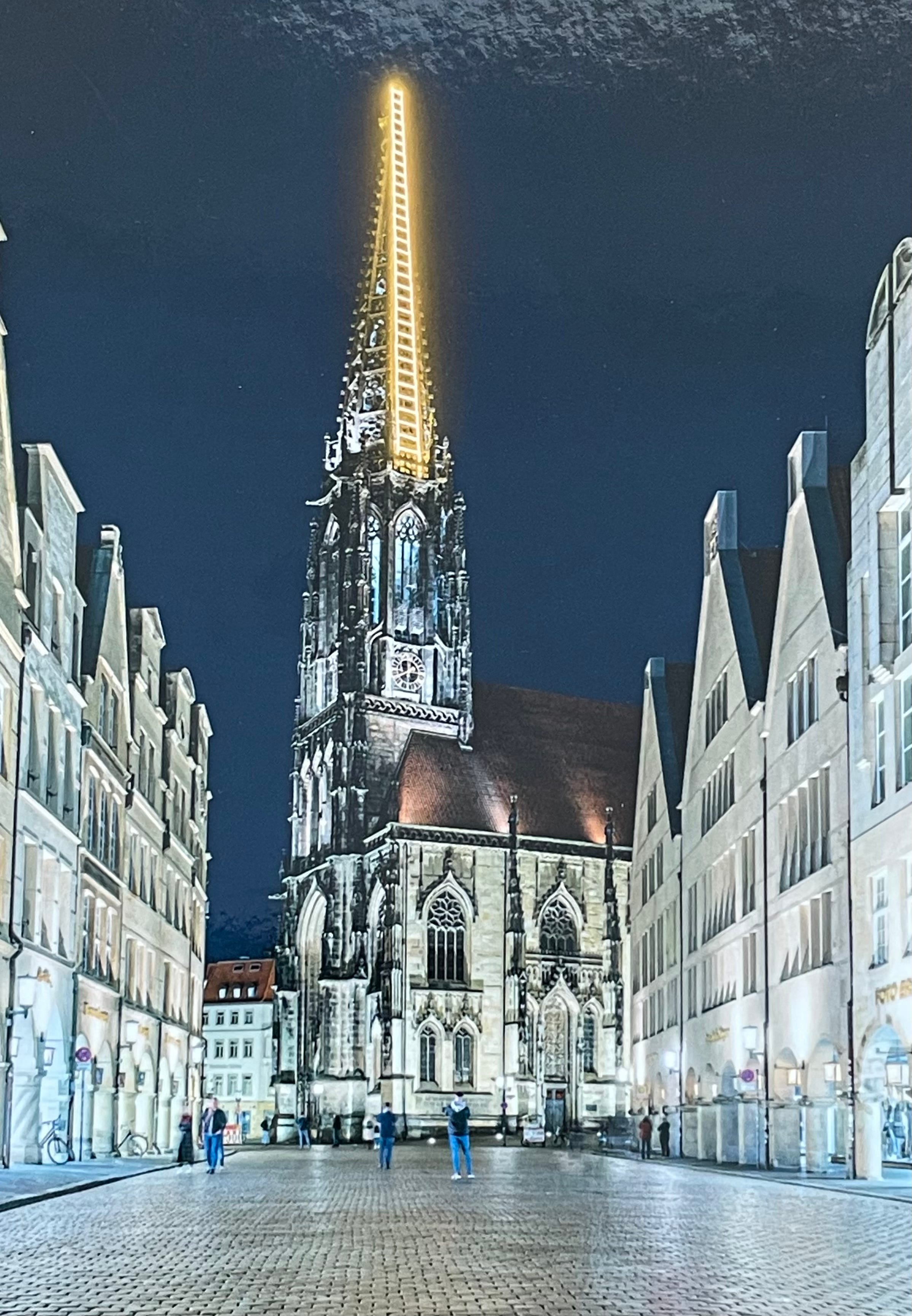
Above it all, three empty cages still hung against the sky.
Almost five hundred years later, they still ask the same question of everyone who looks up.
I arrived in Münster expecting to remember the church.
Instead, I left thinking about three empty cages.
Sometimes history doesn’t whisper.
Sometimes it hangs above a busy market square, waiting for someone to look up.
I spend a lot of time researching and sharing these family connections, so if this post helped you uncover part of your family story, you can support my ongoing research here:

If you’d like to follow more of my research and stories, you can explore more here:
I'm adding these Anabaptists to my list of mind virus cultural hysteria. He must have been something to convince 16 women to marry him. Great find, Paul.
Radical religious movements tend to end badly. The best example was a nineteenth-century American "end times" one that has a name that garners win, place, and show for the most apt monicker ever https://en.wikipedia.org/wiki/Great_Disappointment . No relation!