

Why would a coffin be placed on top of a churchyard wall?
At Edington Priory, visitors can still see a strange coffin-like structure resting along the eastern boundary wall of the churchyard, balanced between consecrated ground and the world outside.
Unlike the memorials and graves surrounding it, this monument seems separate from everything around it. No inscription clearly explains it, no confirmed burial records identify it, and over time it has become the subject of local legends and speculation.
The History of Edington Priory
Founded in the mid-14th century as a house for Augustinian canons, Edington Priory has stood for centuries as a place of worship, discipline, and community life. Its church, dedicated to St Mary, St Katherine and All Saints, remains a Grade I listed parish church today.
Within its walls lie the expected memorials of the past: worn effigies, engraved stones, and carefully marked burials. Yet outside, on the very edge of the sacred boundary, sits something altogether more unusual.
Why Was the Coffin Placed on the Wall?
The location is what makes this mystery so compelling.
In medieval England, burial within consecrated ground was of deep spiritual importance. To be laid to rest within a churchyard meant remaining within the protection and blessing of the Church.
But not everyone was granted that privilege.
Those who were unbaptised, excommunicated, or considered outside the moral or religious boundaries of the community were often denied burial within sacred ground. In such cases, the boundary itself, the very edge of consecrated land, could become a final resting place.
If the coffin on the wall at Edington Priory does mark a burial, it may represent a compromise: neither fully accepted nor entirely cast out.
Medieval Burial Practices and the Edge of Consecrated Ground
While unusual, boundary burials are not entirely without precedent. Across England, there are scattered examples of graves placed at the edges of churchyards, reflecting the complex beliefs surrounding death, sin, and salvation.
The churchyard wall was more than a physical boundary, it symbolised the divide between the sacred and the ordinary world. To be placed upon it was to exist between those two realms.
Whether intentional or symbolic, such a placement would have carried meaning for the community that created it.
Legends of the Edington Priory Coffin
Where historical records fall silent, stories begin to grow.
Over time, several local traditions have emerged to explain the coffin:
One tells of a disgraced monk who slipped out at night to visit local women. Excommunicated for his actions, he was denied burial within the churchyard and instead placed upon the wall.
Another, darker version suggests that a young monk was punished for falling in love and walled up alive, a tale that reflects medieval fears more than historical reality.
For local children, the explanation was simpler and more unsettling: it was known as the “Witch’s Coffin”, said to hold someone too dangerous or unwelcome to be buried properly.
None of these stories are supported by surviving church records. There is no confirmed identity, no date, and no definitive explanation.
And that uncertainty is what gives the story its lasting power.
Possible Explanations
There are, of course, more practical explanations.
Coffin-like monuments and chest tombs can sometimes be found against walls or marking burials beneath them. In some cases, they are memorials rather than containers; in others, they serve symbolic or decorative purposes.
The structure at Edington may be one such monument, its unusual placement perhaps intentional, perhaps simply lost to time. It could date back several centuries, possibly even to the priory’s early history.
Without records, however, certainty remains just out of reach.
Why the Mystery Endures
The coffin on the wall is more than a curiosity.
It is a reminder of how past communities drew boundaries, between sacred and profane, belonging and exclusion. It hints at lives that did not fit neatly within accepted norms, and at the ways people chose to remember them.
For family historians, mysteries like this are especially compelling. They speak to the gaps in the record, the unnamed, the unrecorded, and the stories that survive only through place and memory.
Standing there today, balanced between two worlds, the coffin on the wall remains unmoved by time, its occupant unknown, its story untold.
Visitors pass, generations change, and still it waits on that narrow line between the sacred and the forgotten.
Not quite buried. Not quite remembered.
Perhaps that uncertainty is exactly why the story has survived for so long.
I spend a lot of time researching and sharing these family connections, so if this post helped you uncover part of your family story, you can support my ongoing research here:

If you’d like to follow more of my research and stories, you can explore more here:
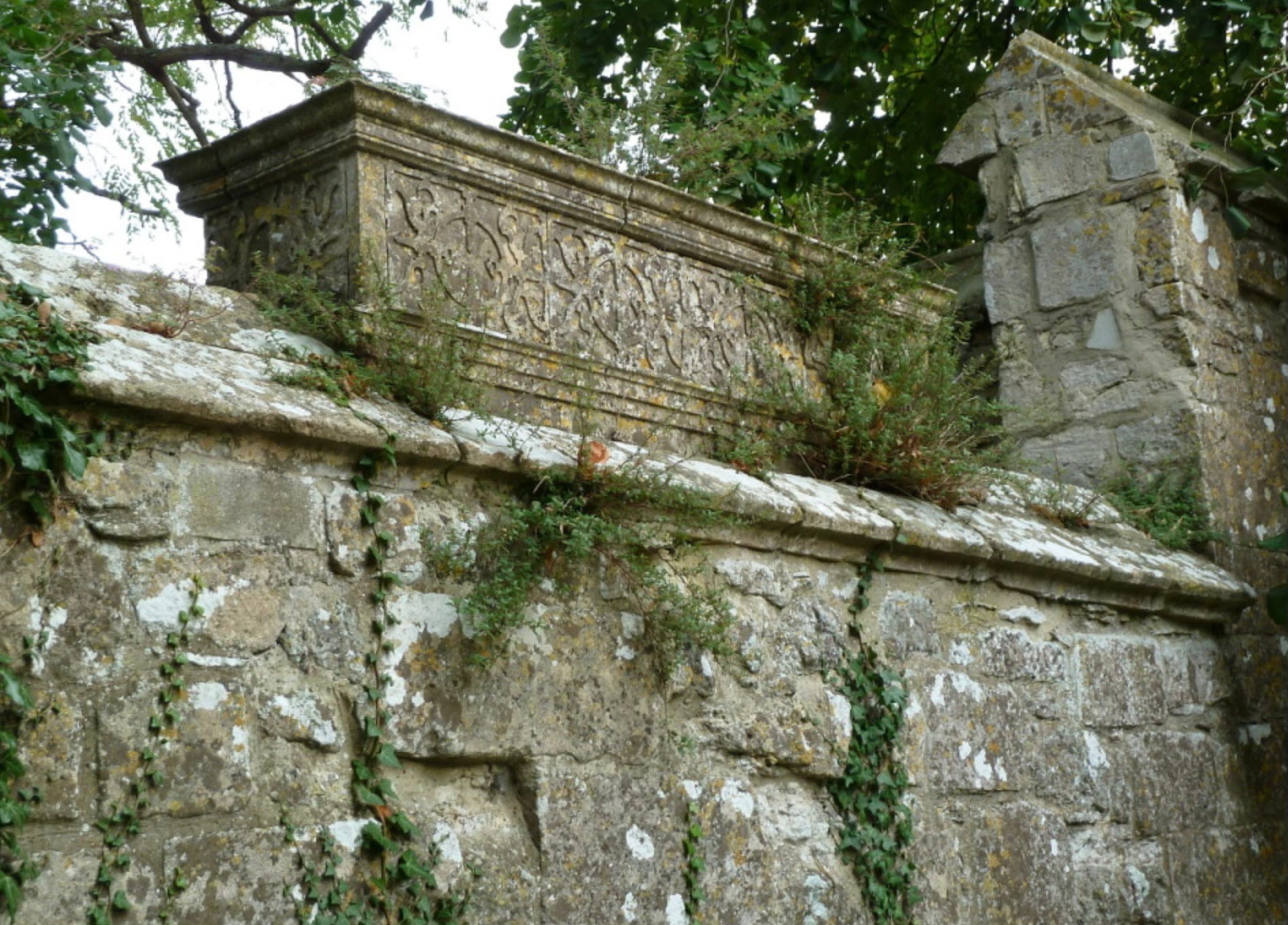
(Image Courtesy of Chris Pullen)
What an amazing place and story. I am thinking that the most fascinating stories with long lasting impact are often the ones around boundaries - for example, what an individual was pushed to do or did not do, or some action evidencing moral or emotional duality, not to mention the geographical intersections of various cultures and so on.
It is certainly an interesting mystery ... Alas we may never know the answer to this puzzle ... Unless a document eventually turns up somewhere to explain it ... I expect not but never say never.